
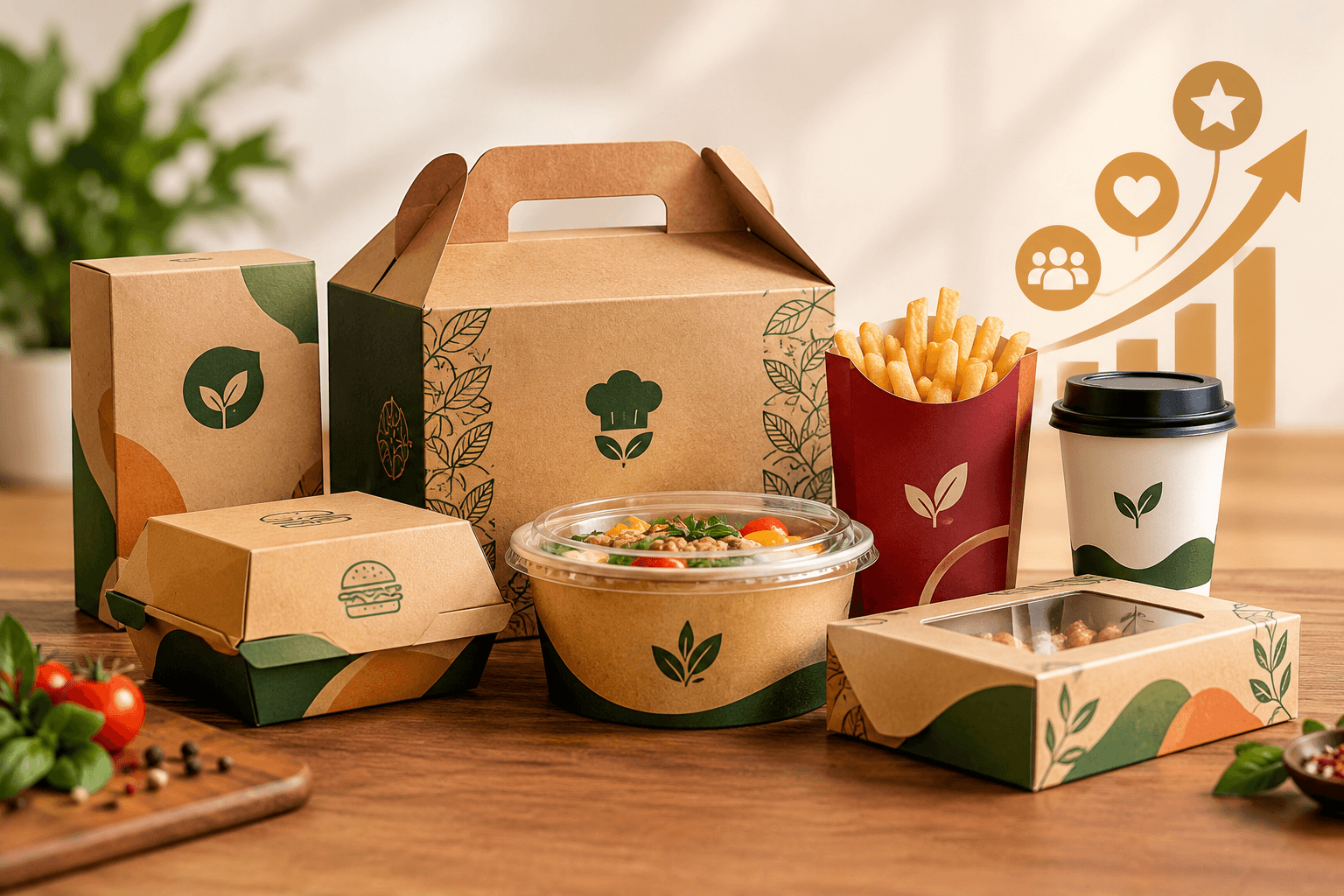
How Custom Food Packaging Boxes Help Build a Strong Food Brand
Why Is Food Packaging Important for Brand Building?
Food packaging plays a significant role in shaping how customers see a brand because they form an opinion about the product just by looking at the box. It displays your logo, colours, and product details, which makes people remember you the next time they shop.
For most food brands, the box is the only physical thing a customer holds before trying the product. If it looks cheap or generic, people assume the product inside is average too. If it looks well-made, they expect and trust the product to be just as good. That is one reason so many food businesses now choose custom food packaging boxes instead of picking something off a shelf. A box that carries your name, your colours, and your style does more than hold food. It establishes trust and brings customers back.
What Are Custom Food Packaging Boxes?
They are boxes made to match a brand’s own design, size, and material needs, rather than a generic box bought in bulk. Businesses choose the shape, printing, finish, and colours themselves.
Standard packaging is made for many buyers at once, so it stays plain and generic. Custom printed food packaging is designed around one brand’s requirements: the size of the product, the story the brand wants to tell, and the finish that suits the price point. This could mean anything from a simple printed sleeve for cookies to a fully branded box with foil printing for a premium snack. Personalised food packaging gives a business room to work with its own identity instead of adjusting to someone else’s template.
How Custom Food Packaging Boxes Build a Strong Food Brand
Creates a Recognisable Brand Identity
When the same colours, logo, and fonts appear on every product, customers start recognising your brand from a distance, without reading a single word. This matters even more once a business sells several products. Branded food packaging keeps that visual thread consistent across your whole range, so a customer who liked one product can spot your others just as easily.
Makes Products Stand Out on the Shelf
Food stores are crowded, and most shoppers decide in seconds. Custom printed packaging with clear graphics, good colour choices, and a distinct box shape gives a product a fighting chance against dozens of similar-looking options nearby. Packaging becomes like a salesperson working on your behalf.
Communicates Quality and Professionalism
Sharp printing, the right material, and neat finishing tell customers a lot before they taste anything. A box with smudged print or flimsy material makes people question the product itself, fairly or not. Clean, well-finished packaging earns confidence right at the point of purchase.
Creates a Better Customer Experience
Looks aren’t everything with packaging. It should open easily, close properly, and fit the product without wasted space. A box that’s simple to use and pleasant to look at adds to how satisfied a customer feels after the purchase, and satisfied customers return.
Supports Brand Consistency Across Products
Snacks, bakery items, ready-to-eat meals, dry foods, takeaway packs, and speciality products often come from the same brand but look completely different on the shelf. Custom packaging keeps a visual thread running through all of them, so the brand feels like one identity rather than several unrelated products.
The Role of Food Packaging Printing in Brand Recognition
Importance of food packaging printing in food brands:
Printing is what actually puts your identity on the box: your logo, product details, brand colours, and design elements. Without good printing, even the best packaging design stays invisible.
Food packaging print quality decides how sharp your logo looks, how readable your product information is, and how well your brand colours come through. Consistent food packaging and printing across every batch means customers see the same brand experience every time they buy, not a slightly different version each month.
Personalisation Helps Food Brands Connect With Customers
Personalised food packaging gives brands room to design for specific moments: a festive edition, a limited-run flavour, or packaging tied to a particular campaign. These small design changes make a product feel current and give customers a reason to notice it again. That said, personalisation alone won’t guarantee more sales. It works best alongside a good product and consistent quality.
Choosing the Right Food Packaging Design
Match packaging with your brand identity. Stick to your existing colours, logo placement, and typography so packaging feels like a natural extension of your brand, not a separate design exercise.
Consider functionality and board quality. The box still needs to do its basic job, like fitting the product correctly, stacking neatly in storage and holding up during transport. Use food-grade board made from safe raw materials and tested for low odour. A carton is secondary packaging and doesn’t touch the food, but the board shouldn’t pass any smell to it.
Choose suitable printing and finishing. Print quality and finish (matte, gloss, foil, and so on) should match your product’s price point and stay consistent across orders.
Why Businesses Work With Food Packaging Printing Companies
A good packaging partner offers a lot beyond just a printing machine. Look for strong printing capabilities, real customisation options, a range of materials and finishes, and proper quality checks. Businesses producing in bulk also need a partner who can scale without dropping consistency between batches, along with some design support if you don’t have an in-house designer. Experience specifically with food packaging matters too, since food products have their own handling and material needs.
Custom Printed Food Packaging vs Standard Packaging
|
Custom Printed Food Packaging |
Standard Packaging |
|
Brand-specific design |
Generic appearance |
|
Supports visual identity |
Limited branding |
|
Flexible customisation |
Limited options |
|
Product-specific sizing |
Standard sizes |
|
More room to stand out |
Less distinctive |
How to Choose the Right Packaging Partner
Before signing on with a printing and packaging company, check for:
- Print quality on sample runs
- Customisation options for size, shape, and finish
- Range of available materials
- Production capacity for your order sizes
- Consistent quality control
- Design assistance if needed
- Reliable communication and turnaround times
Turn Packaging Into a Brand-Building Tool
Custom food packaging boxes do more than, hold a product Done right, they give a food brand a recognisable identity, a professional look, and a customer experience people remember. If you’re looking to move from generic boxes to packaging that actually represents your brand, working with an experienced food packaging and printing partner like Blossom Print & Pack is a good place to start.
Frequently Asked Questions
Q1. What are custom food packaging boxes?
They are boxes made to match a brand’s own design, size, and material needs, rather than a generic box bought in bulk. Businesses choose the shape, printing, finish, and colours themselves.
Q2. How is custom food packaging different from standard packaging?
Standard packaging is made in bulk for many buyers, so it stays plain. Custom packaging is designed around one brand’s product size, story, and price point, giving it a distinct look.
Q3. Does custom packaging cost more than standard packaging?
It usually costs more upfront because of design and print work, but many brands see it as an investment that pays off through better recognition and repeat customers.
Q4. What should I look for in a food packaging printing company?
Check their print quality, customisation options, materials, production capacity, and whether they offer design support. Ask to see sample runs before committing to a bulk order.
Q5. Can small food businesses use custom packaging too?
Yes. Custom packaging isn’t only for large brands; smaller businesses can start with simple changes like a printed sleeve or a branded label before moving to fully custom boxes.